
Risk-based testing: check your scores against escaped defects
Take a QA lead whose team uses risk-based testing to plan each sprint. Every story gets a risk score, the team tests the high scorers first, and the low scorers…
You have read this

In the fast-paced world of software development, staying ahead of the competition means consistently delivering high-quality software at a brisk pace. Traditional testing methods—largely manual and time-consuming—are no longer sufficient to keep up with rapid release cycles and evolving customer demands. Fortunately, advances in Artificial Intelligence (AI) are transforming the testing landscape. By leveraging AI-powered testing, development teams can drastically reduce bottlenecks, cut costs, and achieve higher software quality. Below is an in-depth look at how AI is reshaping the testing process and what that means for organizations aiming to stay competitive.
Before exploring how AI changes the game, it’s important to understand the typical hurdles that plague traditional, manual testing processes:
Time-Intensive: Manual testing involves writing detailed test scripts, performing each step meticulously, and manually validating results. Regression testing alone can take days or weeks, holding back product releases.
High Costs: The more test coverage you need, the larger your team must be—or the more hours you need them to work. This approach is not cost-effective and can quickly eat into budgets.
Human Error: Manual testers can make mistakes, overlook certain scenarios, or lack the specific domain expertise necessary for comprehensive testing coverage.
Maintenance Overload: Each time the software changes, test scripts must be updated. Even small UI changes or new features can trigger major script rewrites, making test maintenance one of the most tedious tasks in QA.
Limited Scalability: As applications grow more complex, scaling manual testing to cover multiple operating systems, devices, and configurations becomes increasingly difficult.
AI-powered testing addresses many of these pain points. By automating the creation, execution, and maintenance of tests, AI solutions reduce the effort required from human testers while improving software quality and reliability. Here are the fundamental ways AI shapes the testing process:
Test Creation and Optimization
Machine learning algorithms analyze codebases, user flows, and prior test results to propose or even generate new test scenarios. These algorithms can also prioritize tests based on risk, business impact, or likelihood of defects, making sure time is spent on the tests that matter most.
Intelligent UI Validation
Traditional test scripts often break with even minor changes to the UI. AI-based test automation tools use computer vision and self-healing locators to automatically adapt to layout shifts, label changes, or dynamic element IDs—drastically cutting down on maintenance.
Automated Maintenance
When a change to the application breaks a test, AI-powered solutions can often fix issues on the fly or propose a fix for human review. This “self-healing” capability means that QA teams spend much less time updating broken scripts.
Advanced Defect Detection
By analyzing past bug data, patterns in test failures, and even production logs, AI can predict where issues might arise. This proactive approach helps catch issues early, minimizing the time and cost associated with fixing defects later in the development cycle.
Multi-Faceted Testing
AI testing tools can run functional, performance, and even security tests simultaneously. This enables continuous integration pipelines to get comprehensive results quickly and feed them back to developers without slowing down the pipeline.
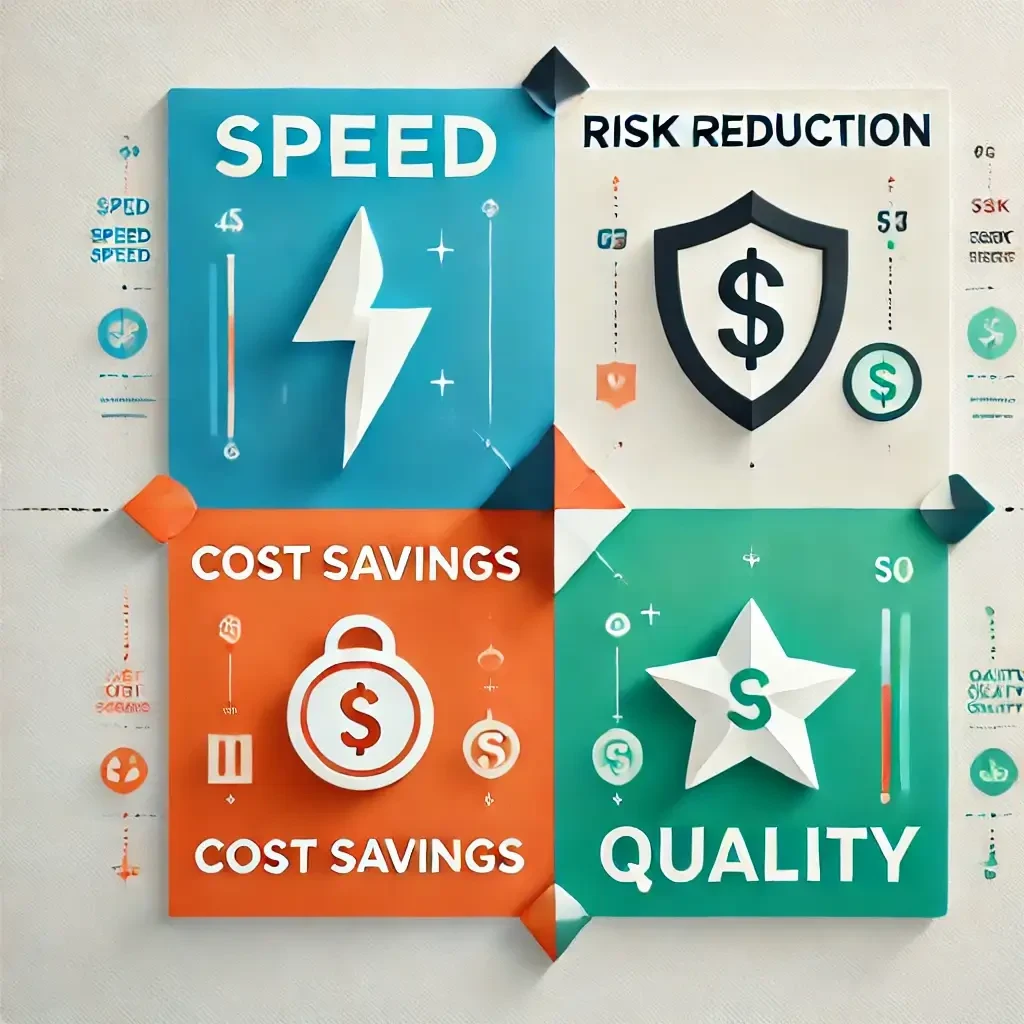
Time-to-market is crucial for modern software products. By automating repetitive tasks and streamlining the entire testing process, AI-powered testing significantly reduces the time spent on regression and acceptance testing. Test results become available faster and in greater detail, allowing teams to pinpoint issues and fix them promptly. The net effect is shorter development sprints and more frequent releases.
AI solutions excel at continuous learning. As more test data is fed into the system, the AI’s algorithms refine their defect detection and test coverage strategies. This leads to a higher probability of catching critical defects sooner, thereby reducing the risk of releasing buggy software. Early detection not only improves the final product but also cuts down on the costly process of rework.
Effective QA teams often require specialized staff, large resources, and considerable time. By automating major portions of test creation, execution, and maintenance, AI allows organizations to optimize the size and focus of their QA teams. Rather than juggling repeated manual tasks, testers can focus on more complex, value-driven activities such as exploratory testing, test planning, and overall quality strategy. This shift significantly reduces operational expenses and helps QA teams do more with less.
Quality issues in production can greatly impact customer trust. Persistent bugs or downtime may result in lost opportunities, damage to brand reputation, and long-term financial repercussions. AI-powered testing puts robust defenses in place to catch potential defects early and maintain consistently high-quality standards. The result is smoother user experiences, happier customers, and ultimately, higher revenue.
 Key Benefits of AI-Powered Testing
E-Commerce: Large e-commerce sites push updates daily—new promotions, website layout changes, and enhanced checkout flows. AI-powered testing tools adapt to these changes and ensure the critical user paths (search, add-to-cart, checkout) remain functional, drastically reducing the time testers spend on updates.
Banking and Financial Services: Security and compliance are paramount in finance. AI helps by running continuous regression and security tests. When an update is released, these automated tests run quickly and efficiently, identifying vulnerabilities or performance bottlenecks that could compromise customer data or service reliability.
Healthcare: Medical software requires rigorous compliance checks and data integrity tests. AI can parse and validate enormous amounts of test data, ensuring that key patient-care workflows are functioning correctly—and that they comply with HIPAA or other relevant regulations.
Mobile Apps: With the endless variations of device models, operating systems, and network conditions, mobile testing can be overwhelming. AI accelerates the process by analyzing usage patterns and focusing test coverage on the most critical or frequently used paths in an app. This helps ensure consistent performance across a wide range of real-world conditions.
Identify High-Value Areas First
Start by applying AI solutions to the most repetitive or high-impact tests. By automating these areas first, you’ll see tangible benefits quickly, building momentum for broader adoption.
Integrate Into Your DevOps Pipeline
Continuous integration and continuous delivery (CI/CD) pipelines benefit tremendously from AI-powered testing. Incorporating AI tools into the pipeline ensures immediate feedback on every code commit and streamlined release cycles.
Iterate and Refine
AI-powered solutions are not a one-and-done affair. Feed them data, analyze the results, and refine your test strategies. Encourage your QA and development teams to consistently improve the model’s performance.
Maintain Human Oversight
While AI can automate and optimize numerous tasks, human insight remains critical. Test architects and QA engineers should validate AI-powered decisions and ensure alignment with business needs.
Keep an Eye on Emerging Technologies
AI evolves at a rapid pace. Stay updated on new techniques and tools that emerge in the test automation ecosystem to ensure your organization stays ahead of the curve.
The transformation from traditional manual testing to AI-powered testing is already well underway, and its momentum is only growing. As technology continues to advance, expect AI to become increasingly capable of addressing both routine and sophisticated testing challenges. Early adopters stand to gain a significant competitive advantage: faster time-to-market, lower operational costs, and improved customer satisfaction.
In an era of heightened competition and relentless release cycles, leveraging AI-powered testing could be the key differentiator. By automating test creation, intelligently executing tests, and self-healing failing scripts, AI allows QA teams to devote their energy to higher-level strategic tasks—ultimately elevating both the speed and quality of software delivery.
Are you ready to take the next step in modernizing your testing process? AI-powered testing holds the promise of radically improving the way organizations approach QA. Now is the time to embrace a paradigm where efficiency, cost savings, and unwavering software quality intersect—driven by the power of artificial intelligence.
Take a QA lead whose team uses risk-based testing to plan each sprint. Every story gets a risk score, the team tests the high scorers first, and the low scorers…
You have read this