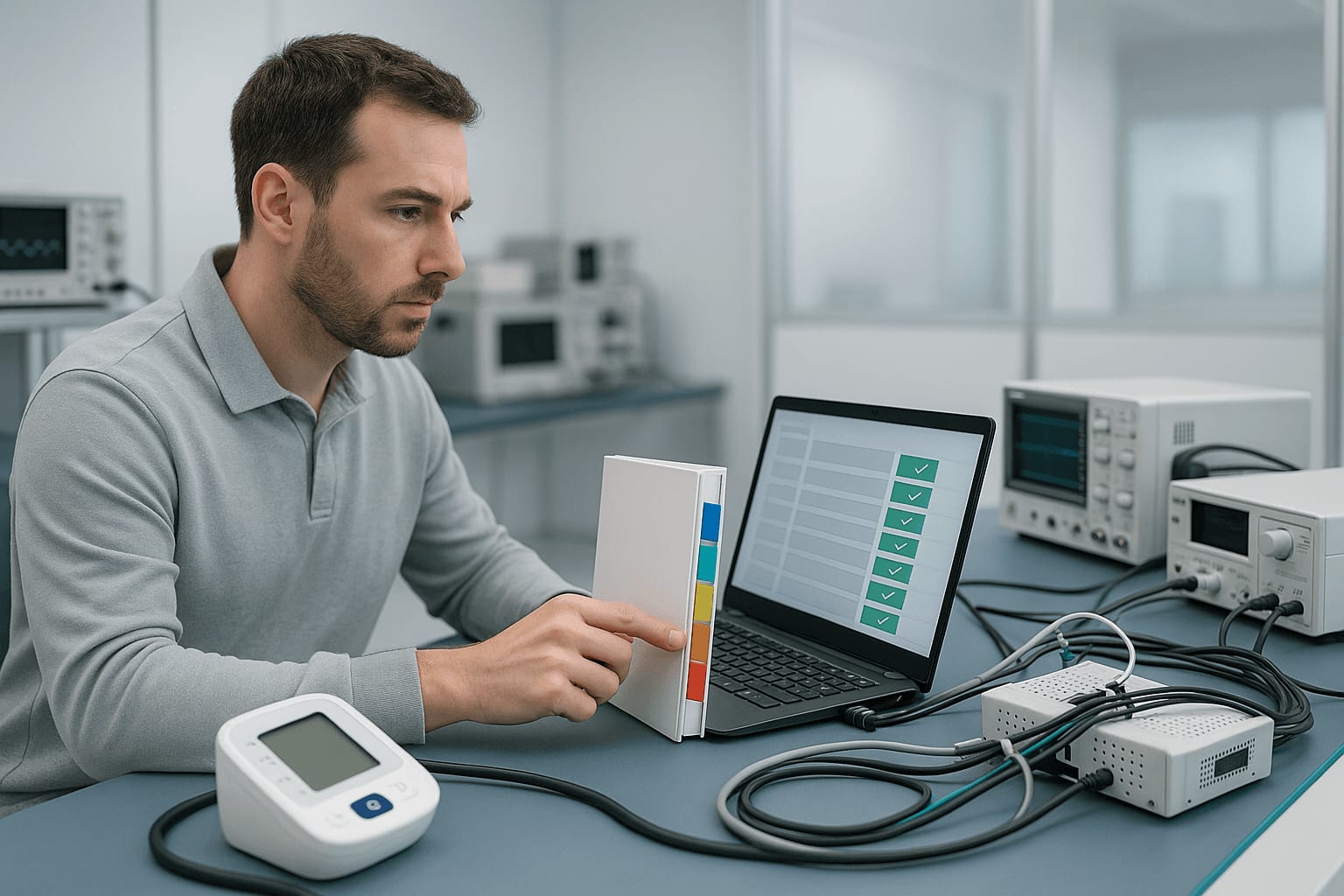
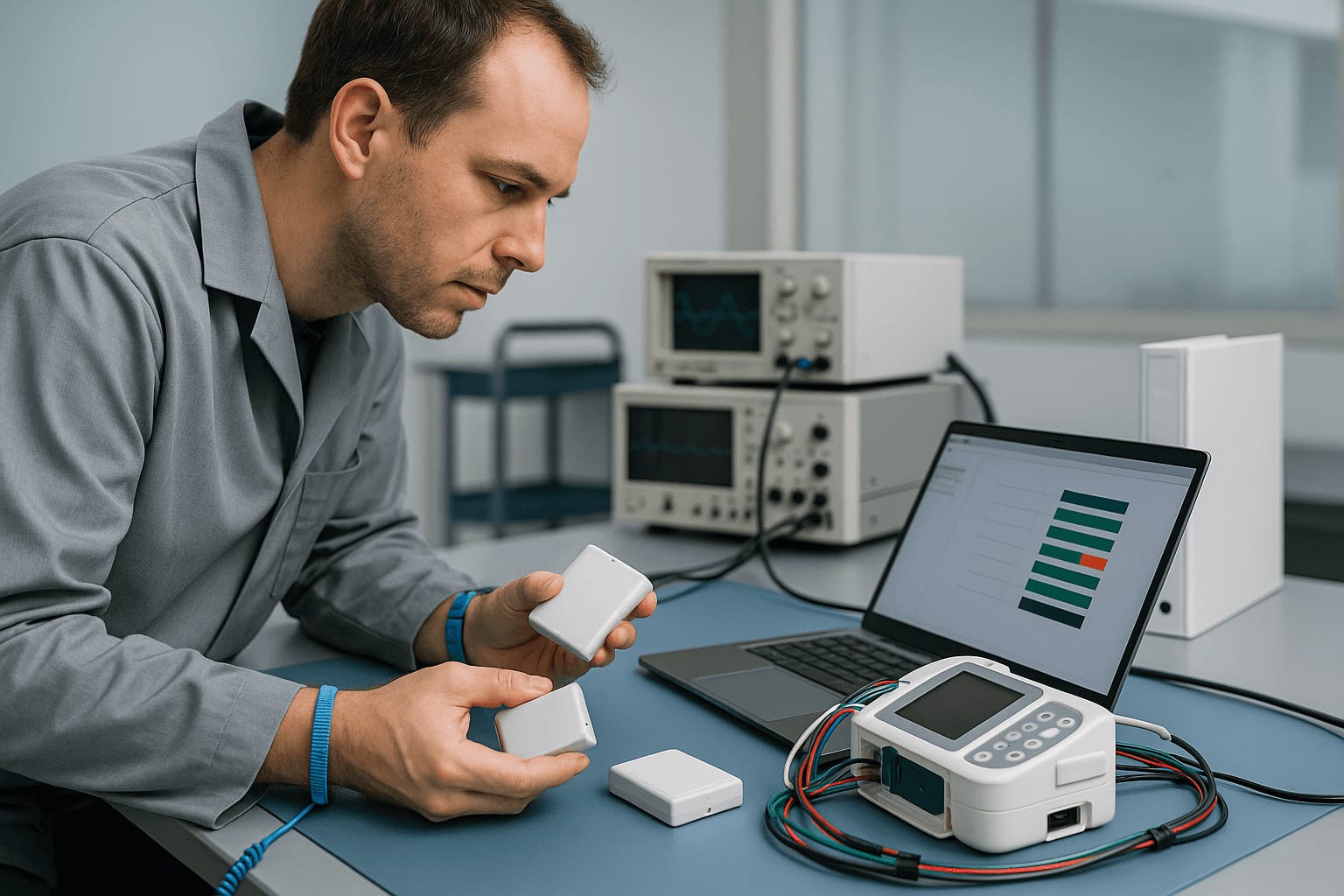
"Software verification, validation, and hazard analysis must demonstrate that the device performs as intended." That sentence is not from a textbook or a consultant's checklist. It is a special control, published by FDA in the Federal Register on 24 July 2026, and it is now part of the price of admission for a whole category of software-only device. Class II special controls are usually read as regulatory prose to be complied with, and they are much more useful read as a V&V test plan with the section headers already written.
What happened on 24 July
FDA issued a final order classifying the diabetes digital behavioral therapeutic device into Class II with special controls, amending 21 CFR Part 880. The device type is defined as a prescription use software device that provides digital behavioral therapy to aid in the management of diabetes. No hardware. No sensor. Software, and the clinical claim attached to it.
The document is FR Doc. 2026-14986, docket FDA-2026-N-7627, effective the day it published. It grew out of a De Novo request, DEN220058, which is the usual path: one manufacturer goes through De Novo, FDA decides the risk profile is manageable with special controls, and the classification opens a 510(k) route for everyone who comes after.
So for the next company building a diabetes behavioral therapeutic, the regulatory question changed shape. It is no longer "how do we convince FDA this class of software is safe." It is "can we produce the specific evidence FDA has already told us it wants." That second question is a test planning question, and it is a much better question to be asked.
What a special control actually is
Special controls exist because Class II devices need more than general controls to give a reasonable assurance of safety and effectiveness, and FDA would rather name the specific mitigations than review every submission from first principles. So the agency writes down, per device type, what the risks are and what evidence retires them.
That is an unusual and genuinely helpful arrangement. In most of a V&V engineer's working life, you infer the acceptance criteria: you read the intended use, you build a hazard analysis, you argue from ISO 14971 about what level of rigor the risk warrants, and you find out at review whether your judgment matched the reviewer's. A special controls list short-circuits that. The regulator has published its own list of what it will be looking for, in advance, in its own words.
Most teams still read it as compliance text. Read it as a table of contents instead.
Reading the Class II special controls as deliverables
Three of the special controls in this order map directly onto work a V&V team already knows how to do. Taking them one at a time:
- Software verification, validation, and hazard analysis must demonstrate that the device performs as intended. This is the whole IEC 62304 lifecycle output plus the ISO 14971 hazard analysis that feeds it, and the operative words are "as intended." Verification against the software requirements is necessary and it is not sufficient here. The evidence has to close the loop back to the intended use statement, which for this device type includes a clinical claim about aiding diabetes management.
- Human factors testing must demonstrate that the user can safely and correctly use the device. IEC 62366-1 territory. Note the two adverbs, because they are separate obligations. Safely means use error does not produce harm. Correctly means the user achieves the intended task, which is a different test with different acceptance criteria and, in a behavioral therapeutic, a user population that includes people managing a chronic condition on a bad day.
- Non-clinical performance testing must demonstrate that the device performs as intended under anticipated conditions of use. "Anticipated conditions of use" is the phrase that generates the test matrix: device fleet, operating system versions, connectivity states, interruption and resume, background behaviour, whatever your use environment actually contains.
Each of those sentences is a test plan section. The scope is given, the objective is given, and the acceptance criterion is given in the form of what the evidence must demonstrate. What is left for you is the method, the sample, and the traceability.
One thing to be careful about. I am working from the three controls I could confirm in the published order, and a classification order can carry additional special controls covering areas such as labeling, cybersecurity, and clinical performance. Pull the Federal Register text yourself before you build a plan from it. Never build a V&V plan from a summary of a regulation, including this one.
Where the classification stops and IEC 62304 takes over
A special control tells you what evidence FDA wants to see. It does not tell you how to develop the software that produces it, and this is where teams new to software devices get into trouble.
IEC 62304 governs the life cycle: safety classification of the software items, the software development plan, requirements and architecture, unit and integration and system testing, problem resolution, and the software maintenance process that follows the device for as long as it is on the market. The special control says demonstrate that it performs as intended. IEC 62304 is the process that makes such a demonstration possible to construct, because it produces the traceability without which "as intended" is just an assertion.
The relationship is worth stating plainly. The classification order sets the acceptance criteria. IEC 62304 builds the evidence chain. ISO 14971 supplies the risk reasoning that decides how much rigor each part of that chain gets. IEC 62366-1 does the same job for the use-related risks. Four documents, one file, and the order they get read in matters less than the fact that the special controls list is the only one of the four written specifically about your device type.
The change-control coda: PCCP and ACP
Here is the part that makes this a bigger story than one device classification.
Software devices change. That has always been the awkward fit between medical device regulation and software, because the regulatory model assumes a device is a thing you finish, and software is a thing you keep releasing. For AI-enabled devices the mismatch became untenable, since the whole value of a model is that it improves against new data.
FDA's answer is the Predetermined Change Control Plan: you describe up front what modifications you intend to make, how you will validate them, and what the acceptance criteria are, and FDA authorises the plan rather than each subsequent change. India published its version three days before this classification. The CDSCO final Guidance Document on Medical Device Software, reference CDSCO/MD/GD/MDSW/01/2026, published 21 July 2026, sets a risk-based Class A to D framework keyed to clinical impact and establishes an Algorithm Change Protocol for AI and ML tools, allowing iterative updates without constant re-licensing. Taiwan issued fresh AI device guidance in the same window.
Three jurisdictions, one idea: pre-approve the change, not the change request.
What that means practically is that a document which used to be written by regulatory affairs at submission time is now a V&V deliverable written at design time, because a change control protocol is only as good as the verification and validation it commits you to running on every future release. Somebody has to specify those tests before the change exists. That somebody is a test engineer.
Where Nopmark fits
The gap this exposes is not regulatory knowledge, it is the translation step: turning a published requirement into a test plan with methods, samples, and traceability that will survive a reviewer. Nopmark's software validation training works through that translation against IEC 62304, and the medical device bundle pairs it with the ISO 14971 risk management and IEC 62366-1 usability material, which is the combination the three special controls above actually demand.
FAQ
Do special controls apply to my device if it is a different device type? No. Special controls are written per classification regulation, so they apply to the device type named in the order. Find your own product code and read the controls attached to it.
Is a Class II special controls list the same as a guidance document? No. Special controls are codified in the classification regulation and carry regulatory force. Guidance documents describe FDA's current thinking and are not binding.
Does this classification mean a diabetes app no longer needs clinical evidence? No. It means the device type has a 510(k) pathway with a defined evidence set instead of requiring De Novo. Read the full order for what clinical evidence the special controls require.
How does the Algorithm Change Protocol differ from a PCCP? Both pre-authorise a defined set of future model changes with their validation. They come from different regulators under different rules, so treat them as parallel mechanisms and write to each jurisdiction's text rather than assuming one satisfies the other.
Where do I find the special controls for my device? Start at the classification regulation in 21 CFR for your product code. The Federal Register order that created it carries FDA's reasoning, which is often more useful than the codified text.
Ready to build V&V evidence a reviewer recognises?
When you can take a published special control, decompose it into methods and samples, trace each one back to a hazard and forward to a result, and hand a reviewer a file that answers their question in their own words, then the submission stops being an argument and becomes a verification. Nopmark's medical device bundle covers ISO 14971, IEC 62304, and IEC 62366-1 together, taught by accredited instructors.