
Risk-based testing: check your scores against escaped defects
Take a QA lead whose team uses risk-based testing to plan each sprint. Every story gets a risk score, the team tests the high scorers first, and the low scorers…
You have read this

What are the key skills required by a software tester when looking for a job? Chris Kenst summarized his experience when trying to hire a software tester in early 2021. Among his key findings were:
Chris' findings reflect our own observations and those of the ISTQB® (International Software Testing Qualifications Board) and ASTQB® (American Software Testing Qualifications Board). New testers can break this barrier and gain education by obtaining the Certified Tester Foundation Level certification. As of July 2021, ISTQB® has administered over 1,065,000 exams and issued more than 774,000 certifications in 129 countries world-wide. ISTQB Foundation Level certification is your easy first step toward better software testing and a software testing job.
Chris observed some trends in the resumes he received. While risk-based testing knowledge is a highly desired skills for a software tester, only 2 applicants had this knowledge. Risk-based testing is a type of software testing based on potential risk. This includes assessing risks based on software complexity, business importance, frequency of use, potential failure areas, and more. Risk-based testing prioritizes testing the functionality of high-impact areas of the software application.
The risk-based process in software testing is illustrated well by in Requirements for Integrating Defect Prediction and Risk-Based Testing
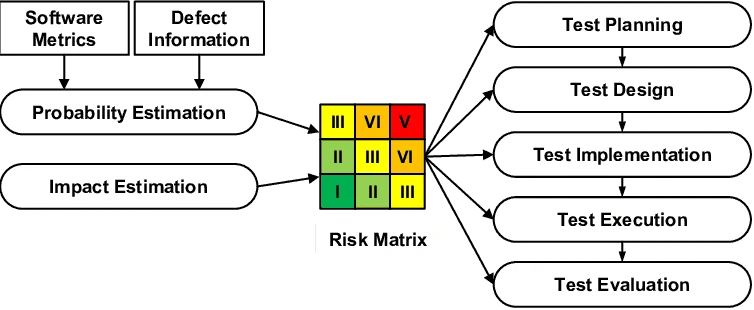
Ramler, Rudolf & Felderer, Michael. (2016). Requirements for Integrating Defect Prediction and Risk-Based Testing. 359-362. 10.1109/SEAA.2016.62.
The break-down of the software tester skills that were seen in the resumes applying for the job were:
Tied to the need for risk-based software testing skills is also regression testing skills. Regression testing is defined as a type of software testing to ensure that recent application or configuration changes do not adversely affect existing functionality. These tests are run to ensure that new code changes do not have side effects on existing features. This ensures that the old code will continue to work after the latest code changes. Since the skills to define the right regression is also dependent on understanding risk-based testing, its not much of a surprise that if a tester is lacking skills in one are they will also lack the skills in the other.
Take a QA lead whose team uses risk-based testing to plan each sprint. Every story gets a risk score, the team tests the high scorers first, and the low scorers…
You have read this