
Risk-based testing: check your scores against escaped defects
Take a QA lead whose team uses risk-based testing to plan each sprint. Every story gets a risk score, the team tests the high scorers first, and the low scorers…
You have read this

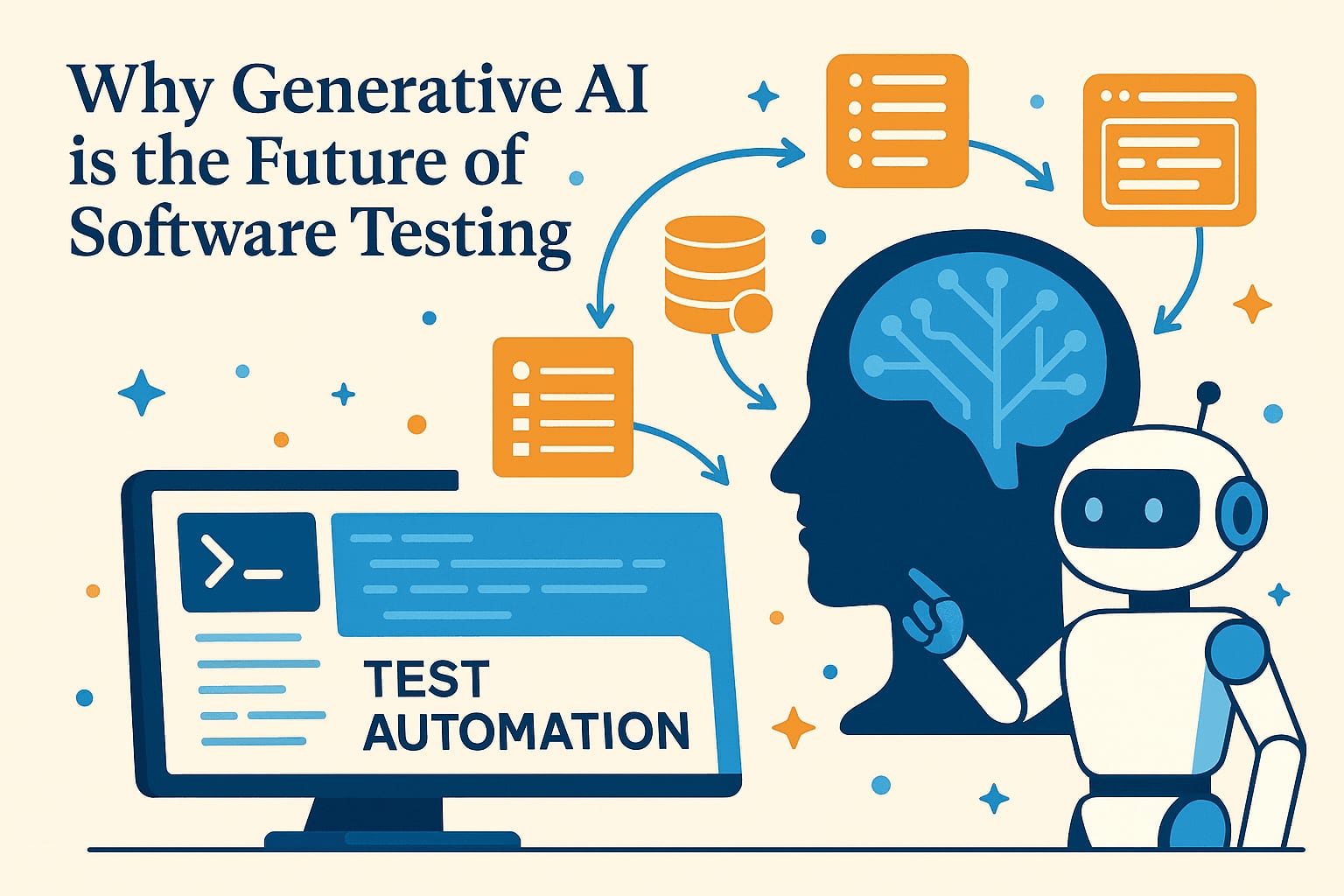
In the dynamic landscape of technology, Generative AI (GenAI) is no longer a futuristic concept—it's a present-day reality rapidly reshaping industries, and software testing is no exception. As quality assurance professionals, staying ahead of the curve is crucial. This is where the ISTQB Certified Tester - Testing with Generative AI (CT-GenAI) certification comes into play, offering a structured pathway to master these cutting-edge skills.
Let's explore what this vital certification entails and why mastering GenAI for software testing is your next big career move.
Generative AI, especially Large Language Models (LLMs), offers unprecedented capabilities for enhancing efficiency, coverage, and intelligence in testing. Imagine automating tedious tasks like test case generation, test data creation, and even test script writing with remarkable speed and accuracy. This isn't just about automation; it's about intelligent testware generation that frees up testers to focus on more complex, exploratory, and value-driven activities.
However, leveraging GenAI effectively requires specific knowledge – understanding its strengths, weaknesses, and how to mitigate its inherent risks. This is precisely what the ISTQB CT-GenAI syllabus addresses.
The ISTQB CT-GenAI syllabus is thoughtfully designed to provide a comprehensive understanding of how to integrate Generative AI into your software testing practices. It's structured into five key chapters, each building upon the last to ensure a holistic learning experience.
This foundational chapter sets the stage by introducing you to the spectrum of AI, from symbolic AI to deep learning, culminating in a deep dive into Generative AI and Large Language Models (LLMs). You'll learn the core concepts, distinguishing between foundation, instruction-tuned, and reasoning LLMs, and even touch upon multimodal LLMs.
Key takeaway: Grasping the fundamentals of GenAI and its relevance to software testing.
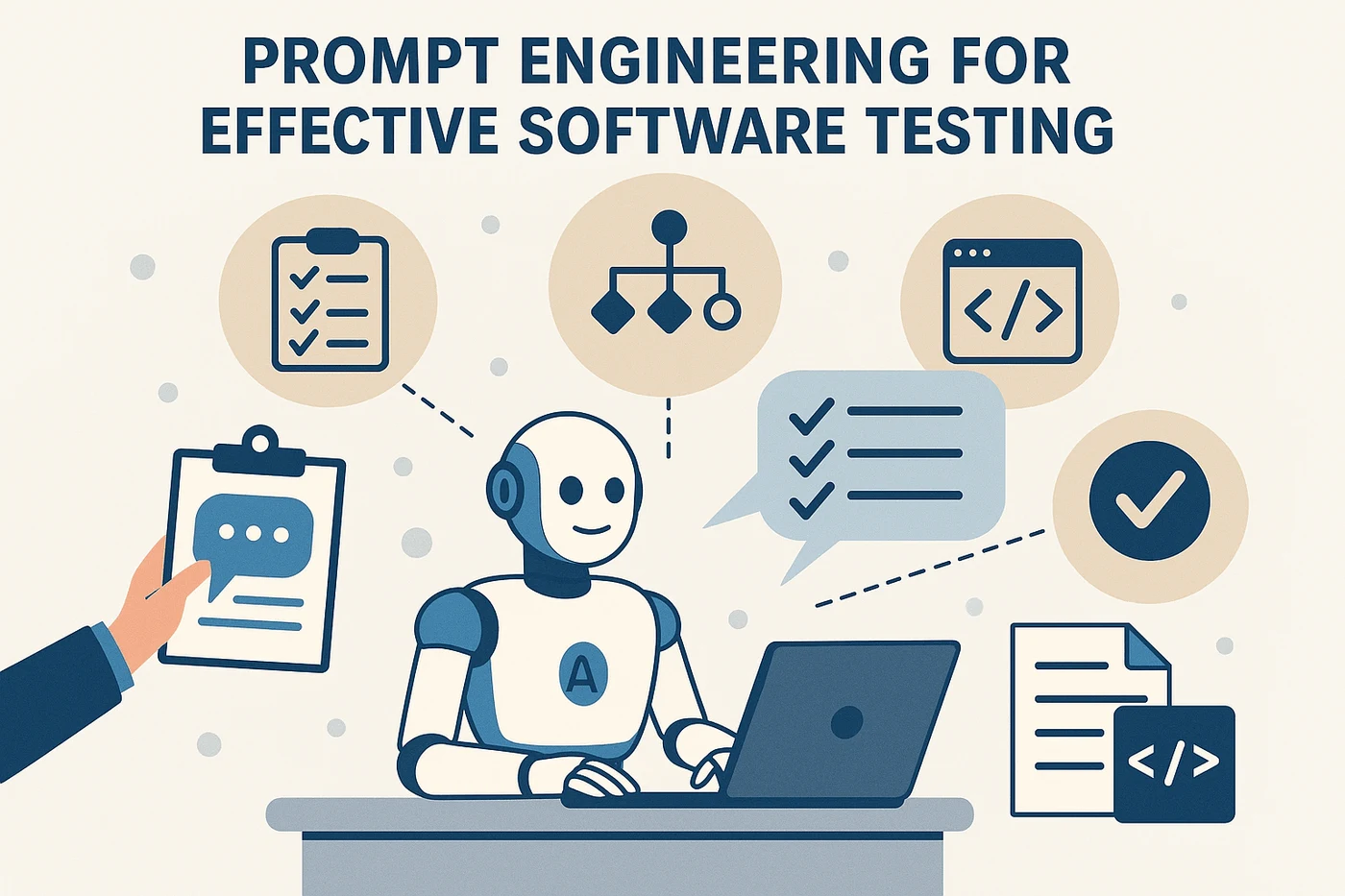
This is arguably the most practical and crucial chapter. You'll master the art and science of "prompt engineering" – crafting effective inputs to get the best outputs from GenAI models. The syllabus covers prompt structures, core techniques, and their application across various test tasks:
Test Analysis: Generating acceptance criteria and test conditions.
Test Design & Implementation: Creating test cases, test procedures, test data, test automation scripts, and test oracles.
You'll also learn to evaluate GenAI results and iteratively refine your prompts for optimal outcomes.
Hands-on focus: Expect numerous exercises to practically apply these prompting techniques.
While powerful, GenAI comes with unique risks. This chapter provides a critical understanding of these challenges and, more importantly, how to mitigate them:
Hallucinations, Reasoning Errors, and Biases: Learn to identify and address inaccuracies or prejudices in LLM outputs.
Data Privacy & Security: Understand the vulnerabilities and strategies to protect sensitive information when using GenAI.
Energy Consumption: Acknowledge the environmental impact and considerations.
Regulations and Standards: Get familiar with relevant AI governance frameworks.
Key takeaway: Responsible and secure implementation of GenAI in testing.
This chapter delves into the architectural considerations for integrating LLMs into your testing ecosystem. You'll explore:
Key Components: Understanding how LLMs fit into your test infrastructure.
Retrieval-Augmented Generation (RAG): A powerful technique for enhancing LLM responses with specific, factual information.
LLM-Powered Agents: Discover how autonomous AI agents can automate entire test processes.
Fine-Tuning & LLMOps: Learn about adapting LLMs for specific test tasks and managing them operationally.
Key takeaway: Building scalable and intelligent testing solutions with GenAI.
The final chapter focuses on the strategic adoption of GenAI within your organization. It covers:
Roadmap for Adoption: From identifying risks like "shadow AI" to defining a comprehensive GenAI strategy.
Selecting LLMs/SLMs: Criteria for choosing the right models for your test tasks.
Change Management: Essential skills and knowledge for testers, and how test processes and responsibilities evolve in an AI-enabled test organization.
Key takeaway: Successfully implementing and scaling GenAI across your QA teams.
The ISTQB CT-GenAI certification is more than just a credential; it's a statement of your readiness for the future of software testing. By mastering the concepts in this syllabus, you'll be able to:
Improve Efficiency: Generate test assets faster and with higher quality.
Enhance Coverage: Identify more diverse test scenarios.
Innovate: Drive the adoption of advanced AI techniques within your team.
Boost Your Career: Position yourself as a leader in a high-demand field.
If you're an experienced tester, test automation engineer, test manager, or even a developer looking to integrate AI into your quality practices, this certification is your next logical step. The prerequisite is the ISTQB Foundation Level certificate, ensuring a solid base in testing principles.
The shift towards AI-driven testing is happening now. Equip yourself with the knowledge and skills to navigate this exciting transformation. Our comprehensive training program aligns perfectly with the ISTQB CT-GenAI syllabus, providing you with expert instruction, hands-on exercises, and practice exams to ensure you're fully prepared.
Don't miss out on shaping the future of software quality.
👉 Learn more about our ISTQB CT-GenAI training and sign up for course launch updates today!
The ISTQB Certified Tester - Testing with Generative AI (CT-GenAI) certification is a globally recognized credential that validates a professional's ability to effectively and responsibly use Generative AI (GenAI) and Large Language Models (LLMs) in software testing activities. It covers a range of essential skills, from prompt engineering to risk management.
This certification is ideal for anyone in the quality assurance and software development fields who wants to leverage AI to enhance their work. This includes:
The mandatory prerequisite for the CT-GenAI exam is the ISTQB® Foundation Level certificate. This ensures candidates have a solid understanding of fundamental testing principles before specializing in the application of Generative AI.
Generative AI can significantly improve testing by automating and assisting in various tasks, such as:
The syllabus dedicates an entire chapter to managing risks. Key risks include:
Prompt engineering is the skill of crafting precise and effective inputs (prompts) to guide a GenAI model to produce the desired output. For testers, this is crucial for getting high-quality test cases, accurate test data, and functional test scripts. The course provides extensive hands-on training in this area, making you proficient in getting the most out of GenAI tools.
To prepare, you should study the official ISTQB CT-GenAI syllabus in depth. Enrolling in a training course that is aligned with the syllabus is highly recommended, as it will provide structured learning, practical exercises, and practice exams to ensure you are fully ready for the certification exam.
Take a QA lead whose team uses risk-based testing to plan each sprint. Every story gets a risk score, the team tests the high scorers first, and the low scorers…
You have read this